The Khapra Beetle: The Tiny Terror of Global Grains
Introduction:
Name: Trogoderma granarium
Order: Coleoptera
Family: Dermestidae
Description & life cycle:
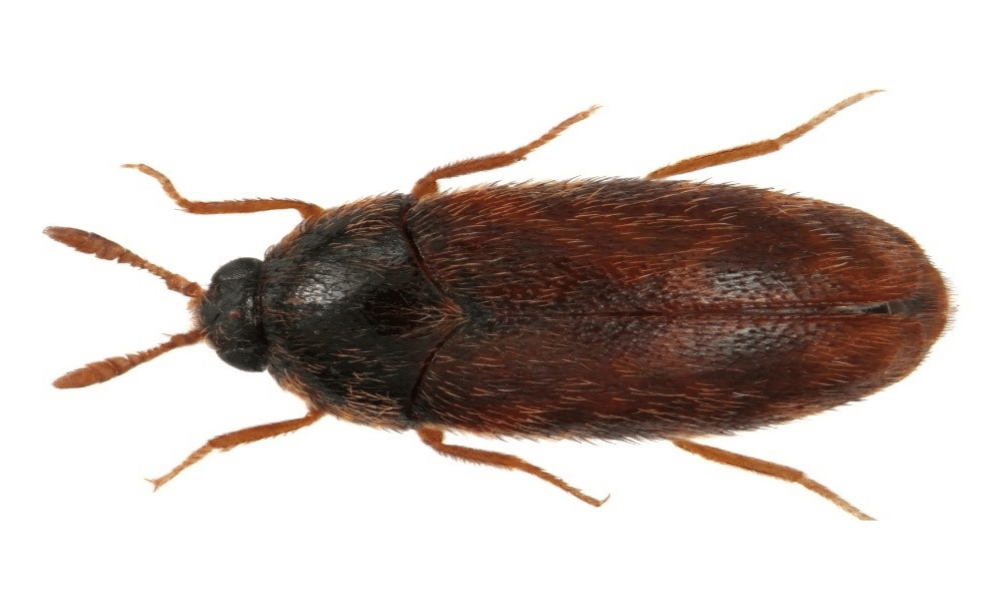
Adult males’ length is about 1.4-2.3 mm long and 0.75-1.1 mm wide; males color is dark brown or black; the life span of adults is 5-10 days; the adults females are about 2.1-3.4 mm long and 1.7-1.9 mm wide; females are slightly larger in size and in lighter colors; these are densely brownish and reddish hairy beetles. The immature larvae of the khapra beetle are also covered with dense and reddish-brown hair. Their larval stages may last up to 4-6 weeks, but sometimes it can be extended up to 7 years.
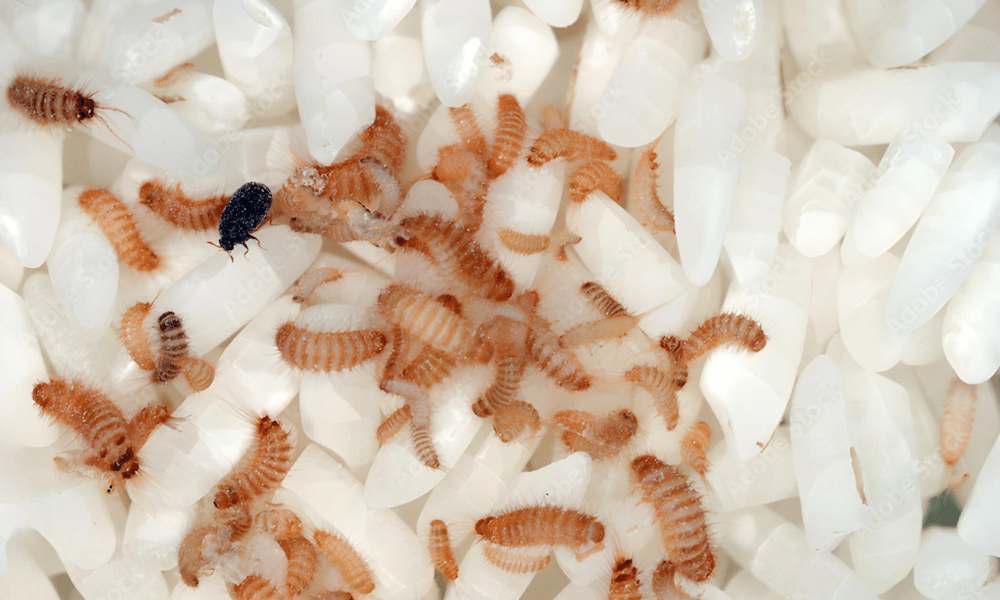
The khapra beetle little beetle has amazing abilities that have resulted in it being recognized as one of the top 100 most world-invasive pests. It always damaged the stored grain, seeds, and other stored products. The larvae of these beetles are voracious feeders of the stored products and also excrete their feces into the stored products, which change their natural taste and make them unfit for human consumption. Larvae also left their fine hair into products that cause allergic reactions. The khapra beetle also prefers such conditions where food is available, such as pantries, malt houses, granaries, godowns, bins, silos, grain, and fodder processing plants.
Khapra beetle eggs appear cylindrical, with one end more rounded and the other more pointed, 0.7mm long and 0.25mm broad, and a weight about 0.02 mg. spine-like projection also clearly visible at the pointed side of the egg. Eggs in their initial stages are a milky white color, but with the passage of time, it turns into the pale yellowish color.

The Silent Threat: How Khapra Beetles Destroy Stored Grains
The khapra beetle damaged the stored products, grain cereals, seeds, oilseed commodities, meals, and flours. In Pakistan, an estimated storage loss due to khapra beetle in food grains has been reported to vary by 4–10% into a single storage season. The larvae wander and out of sacked material, which makes weak sacks, and after tear, larvae feed the rain and reduce the grade and weight of grain.
From Infestation to Elimination: How to Control the Khapra Beetle
Chemical control:
For the eradication of the khapra beetle, mostly the fumigation method, methyl bromide, is most effective against stored product pests. The combination of a fumigant with CO2 concentration that accelerates the respiration rate of the insect pest. In this way, make insects more susceptible to pesticides and fumigants.
Recent and older studies indicate that deltamethrin, fluvalinate, bifenthrin, fenvelerate, cytomethrin, chlorpyriphos, monocrotophos, Spinosad, and methoprene are also used to control the khapra beetle.
Physical method
The resistance development against the phosphine into the khapra beetle has forced scientists to look for their alternate fumigants, to change atmosphere, to elevate temperatures, and to use some other methods that have been conventionally used into the past year.
An atmosphere is composed of 90% CO2 at 45°C; at that temperature, beetles cannot survive because heat combines with CO2-based atmosphere modified, which may be considered the alternative to fumigants for storage pest treatment. To control the stored pest, use hermetic bags and polyethylene sheets. N2-based atmospheres have been used to control khapra beetles with promising results; larvae will have been killed in 6 days with purging N2.
Biological Control
The use of the living organisms that control the pest population (parasites, predators, pathogens, nematodes.) has also been considered to control agents against the khapra beetle. The entomopathogens Mattesia Trogoderma Canning Metarhizium anisopliae
Bacillus have been found to parasitize or prey on the khapra beetle.
Plant Extracts.
Plant extract is also used against the control of the khapra beetle (essential oils, botanical powders, etc.) to repel the khapra beetle. A plethora of plant species are also used. In developing countries, neem oil as a fumigant and oar seed powder seemed to be cheap and effective methods to control beetle attacks on the stored product.
Conclusion
From the above discussion, it seems almost 120 plants and their products are used to control the stored grin pest. Because these insects develop resistance against some pesticides, IPM practices should be followed. Chemical and physical botanical and biologically controlled measures should be used to manage the stored product pest in a compatible manner to minimize the chance of resistance development into insect pest species.
Follow us
Stay Connected
Subscribe to our newsletter for the latest updates on events, research, and certification programs.
- Admin Office
-
Entomological Society of Pakistan.
A-145, Akbar Road, Ghouri Town Phase-3
Islamabad 46000
- Phone : +(92) 318-5128617
- Email : Info@entosociety.pk
- Email : entosocietypk@gmail.com
Quick Links

Copyright © entosociety.pk. Created By RK-Marketing