Entomological society of Pakistan
Termites Invading? Act Now Before They Devour Your Property
Introduction:
Name: Termites, White Ants
Family: Termiticide
Order: Isoptera

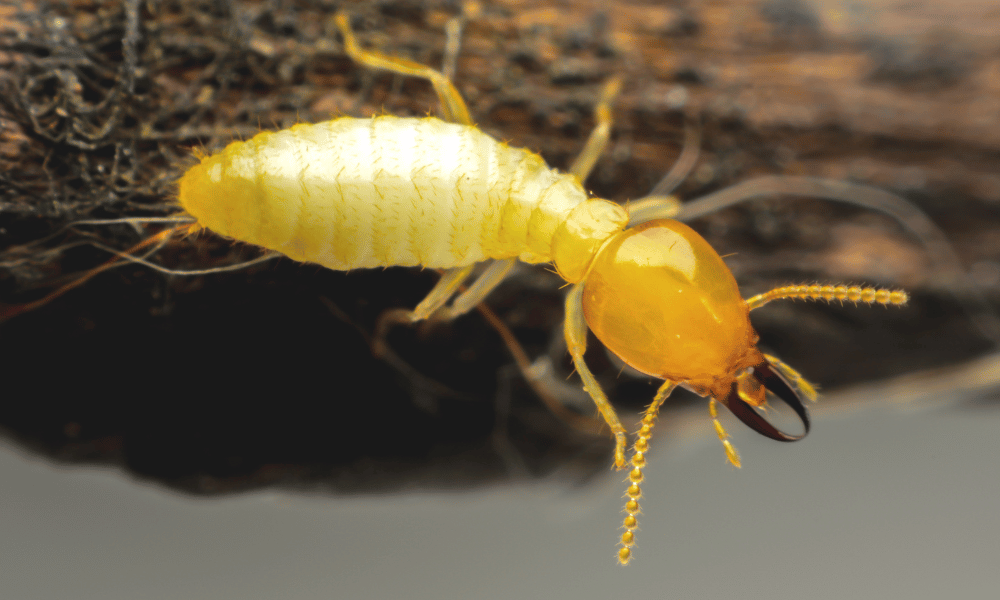
Termites are one of the most important structural insect pests. They are commonly called white ants; they make underground colonies and have diverse ecological needs. Being social insects, termites have quite large colony sizes, and their queen termite can lay millions of eggs in her life. The major damaging stage is worker termites, which are wingless and have soft bodies. Detritophagous eusocial insects, which deliberately use or consume the variety of the decaying plan material. They make mud tunnels to reach the wood structures like doors, windows, coves, and other wood structure materials generally in the forms of wood, leaf litter, and soil humus. Generally, two stages are commonly seen in our houses: building structures, i.e., wingless workers and winged reproductive termites. These reproductive winged termites emerge mostly in monsoon season after rains and are capable of initiating new colonies.
DESCRIPTION:
Termites size also ranges from 10 cm (4 inch) in length for queen species. Macrotermes bellicosus has various colors, from white to brown to black, depending on the life stages of
particular termite species, they have soft-bodied and moniliform antennae, as well as unpigmented worker caste. Termites look like flying ants; these can be distinguished by inspecting their wings, antennae, and abdomen. straight antennae and two sets of wings, equal length of 76 mm, two body segments and straight 10 segmented abdomen, two sternite and tergites, and at the end of the abdomen, a pair of cerci. Most workers and soldiers’ termites are completely blind; some species of termites, such as Hodotermes mossambicus, are distinguished between the light orientation of the sun and moon.
From Egg to Infestation: Unraveling the Life Cycle of Termites
There are three growth stages for termites. Their life cycle starts with eggs, which hatch into nymphs. Before becoming an adult termite, nymph will undergo multiple molts. When termites reach adulthood, they join the reproductive flying alataes, or swarmer’s, who split out to start new colonies and assume their position within the colony’s caste structure.

Egg
Depending on the species, a termite queen can lay anywhere from 20,000 to 30,000 eggs every day. The termite colony as a whole look after and guards the eggs laid by the queen since they are essential to the colony’s long-term survival. After hatching, the majority of the eggs develop into ferocious termite workers. While some of the eggs may develop into army termites, others may become alatae, or reproductive termites.
Nymph
Nymph is the stage at which a termite egg hatch. A nymph is a termite in its early stages. Termite nymphs are either white or a very light brown color, and they are nearly translucent. Upon initial observations, they resemble maggots.
Adult
Termites are gregarious insects with a cast system. The termite belongs to one of several social classes once it has matured. Workers, soldiers, and reproductive classes are among them. Pheromones produced by the queen regulate how other queens in the colony develop. The queen may permit certain nymphs to mature into secondary queens if the colony is expanding quickly so that egg production can keep up with the colony’s overall growth. Because the queen’s pheromone expires with her, new queens emerge in her place.
Worker termites construct chambers and tunnels and are responsible for providing food for the other termites.
Termite Damage: The Hidden Destruction Eating Away at Your Home
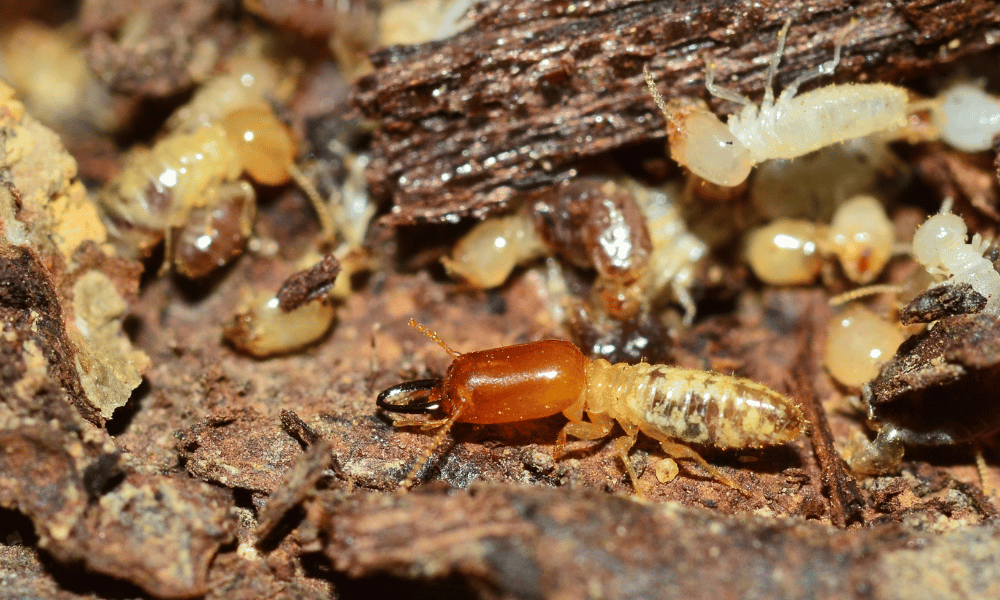
They also attack on the wood products in construction; water damage some time appears to be similar to termite’s damage; they include bulking wood, swollen floors, and ceilings; they are suffering from slight water damage; they also create visible mazes within walls and furniture, similar to mildew and mold; termite’s infestation is similar; they create above-ground food sources through mud tunnels; they create saliva, mud, and faces of the subterranean termites.
Dry wood termites always make their colonies within wooden structures on which they feed. Inside furniture and walls, they can be easily found; they deeply burrow to infest the items. cracks, maze-like tunnels
Take Control: Proven Strategies to Eliminate Termites for Good
Avoid physical contact of wood and wood materials with soil for direct termite access to feed and damage them.
Pre-treatment of construction is crucial to avoid post-construction losses.
Use insect growth regulators like fenuron and diflubenzuron insecticides to have safer termite management.
Use of contact and residual insecticides like fipronil and imidacloprid must be followed with great care.
Biological control:
Biological control, in which living organisms are included to control the infestation of the pest.
Predators:
Some species of the Hodotermes mossambicus were reported in the stomachs of the 56 birds and 19 mammals, such as arthropods, such as ants, centipedes, cockroaches, cricket dragonflies, scorpions, and spiders; reptiles, such as lizards; amphibians, such as frogs and toads; and many birds, echidnas, foes, galagos, numbats, and mic.
Parasites, pathogens, and viruses
less likely to be attacked by parasites, than ants, bees, and wasps, protected well in their mounds; some of these included dipterans, flies, and pyemotes are infected; most nematodes are parasites; certain fungal pathogens, such as Aspergillus nomius and Metarhizium anisopliae; almost 35 fungal species are known to live as parasites on the exoskeleton of termites; they are mostly infected by viruses, including Entomopoxyirinae and nuclear polyhedrosis viruses.
Chemical control:
Some chemical active ingredients, like imidacloprid, fipronil, chlorpyrifos, or bifenthrin, target all life stages of the termites.
Chlorpyrifos 20% EC
Lindane 20% EC
Imidacloprid 30.5% SC
Boric Acid and Orange Oil
Follow us
Stay Connected
Subscribe to our newsletter for the latest updates on events, research, and certification programs.
- Admin Office
-
Entomological Society of Pakistan.
A-145, Akbar Road, Ghouri Town Phase-3
Islamabad 46000
- Phone : +(92) 318-5128617
- Email : Info@entosociety.pk
- Email : entosocietypk@gmail.com
Quick Links

Copyright © entosociety.pk. Created By RK-Marketing