Defending Your Grains: The Sawtooth Grain Beetle Challenge
Introduction:
Name: Oryzaephilus surinamensis
Family: silvanidae
Order: coleoptera
The sawtooth grain beetle is a common stored grain and other stored products pest that belong to the superfamily Cucujoidea. It is an almost common worldwide stored product pest and also damage to chocolate, drugs, and tobacco. This species name is also Rice Lovers.
Sawtooth Grain Beetle (A Global Grain Invader)
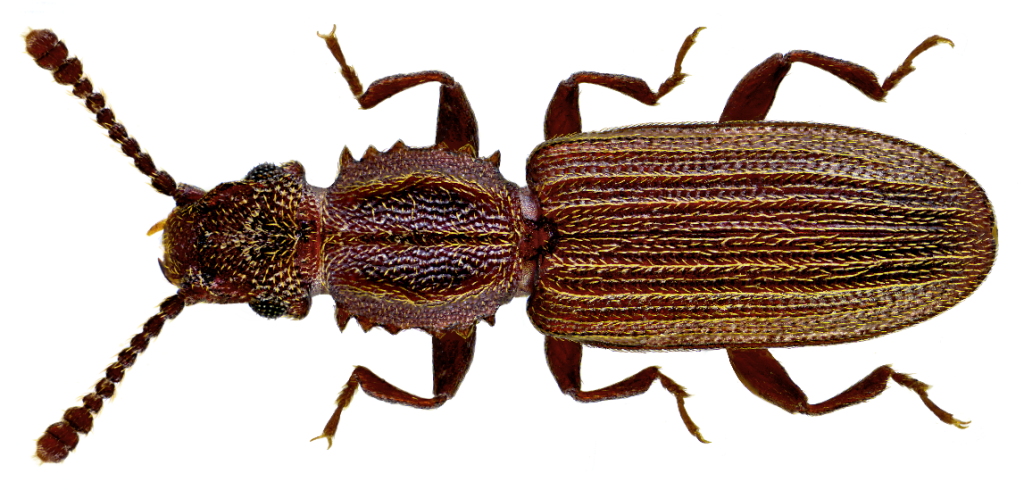
Sawtooth grain beetle is dark brown, has a slender body, and is almost 2.4–3 mm in size; its teeth also run down to the side of the prothorax. It also resembles the merchant grain beetle, which has a more triangular head and smaller eyes. Adults are flat reddish-brown colored with 2 antennae, 6 serrated sawtooth-like ridges on each side of the thorax, and on top 3, on hind legs, males have teeth.
The stored grain or products are more commonly encountered by this pest; it can be found worldwide, wide spread in the food industry, found in food manufacturing and storage, as well as in home pantries. It also prefers the cold climate, especially in Canada and the Northern United States.
Advertisement
LIFE CYCLE:
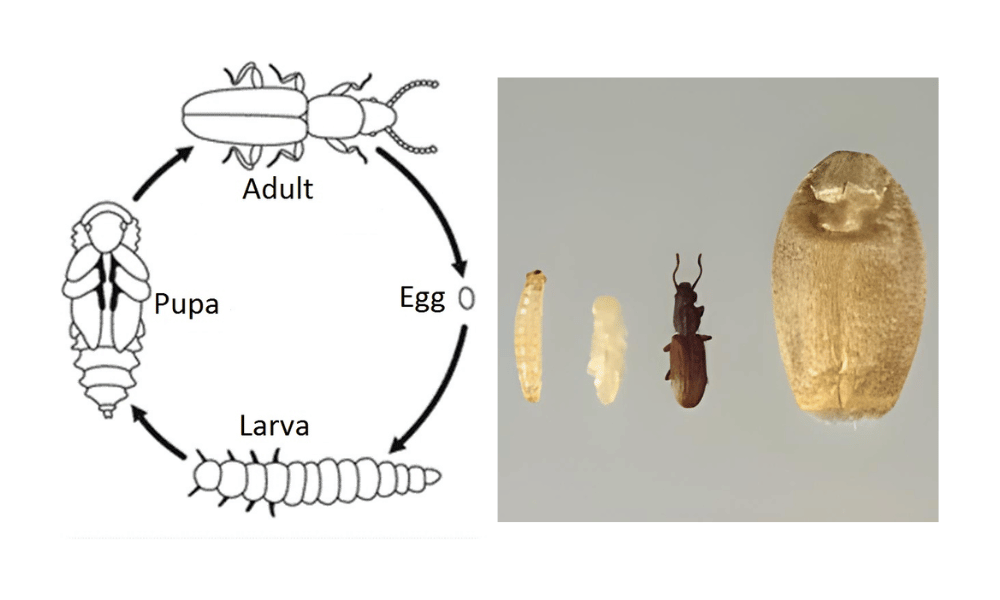
Four life stages. Egg, larvae, pupa, adult
Egg:
In average 6 to 10 months of their life span, the female may lay eggs (43-285), which are deposits near food mass from egg to larval development. The optimum required temperature is almost about 27-29°C (80-85°F), and eggs hatch in 3-4 days.
Larvae:
The length of the larvae is almost 3 mm, which shows a yellow-white color. The food grain and food kernel are damaged by other insects; it also feeds on these damaged products. The developed larvae also bore into the kernel; before reaching pupation, it molts two to four times.
Adults:
Sawtooth grain beetle adults may live up to 6-10 months, most probably they can live to 3 years, for their breeding adults also find new resources of the foods; their total life cycle is almost 27—51 days at 29–35 °C temperature range; they also find on the skin of the people where its infestation is severed but its bite is not harmful.
Sawtooth Grain Beetle Destruction: The Silent Saboteur of Stored Goods
Grains, pet foods, and seeds are mostly encountered by the sawtooth grain beetle. Feeding results may cause shrinkage of the dry masses of the infested product and increased water content due to the metabolic activity of the insect, which can cause the growth of mold. When it attacks the grain, it decreases the value of the grain and makes it unfit for human consumption. These products are also rejected from the market by the sufficient fragments and live insects in the products.
Adults and grub cause roughening of grain surface and create odor in grain, and a higher percentage of the broken pieces, dockage, and foreign matter sustain the heavy infestation. also leads to the heating of grain
Conquering the Sawtooth Grain Beetle: Protecting Your Stored Grains
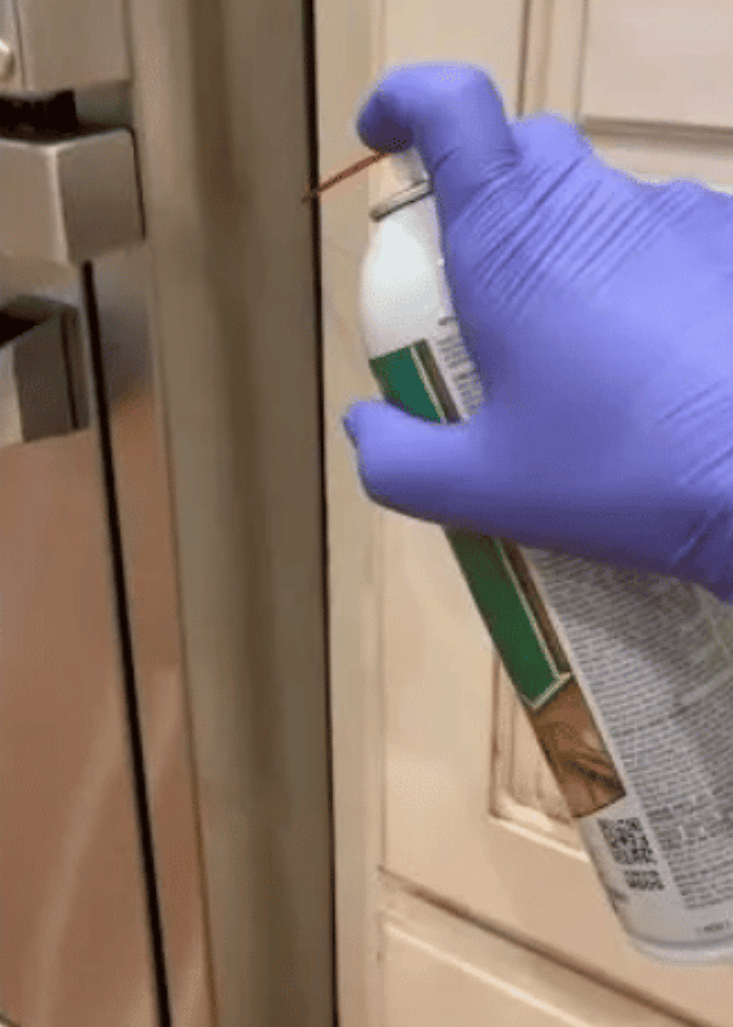
Dried food products Ae should be stored in a strongly sealed container to reduce the rate of the infestation. The infested material needs to be disposed of for the prevention of the infestation. For six days at freezing point, all the life stages of the beetle will be killed. Other means of prevention and control are also necessary, but fumigation is commonly used. Over six months of storage at a large-scale storage operation, a pesticide application may be needed. Fumigation is commonly used to control the food-stored insect pest by the application of phosphine and involves the treatment of the products by the application of gas, which are able to diffuse in a strongly sealed container to reduce the rate of the infestation. The infested material needs to be disposed of for the prevention of the infestation. For six days at freezing point, all the life stages of the beetle will be killed. Other means of prevention and control are also necessary, but fumigation is commonly used. Over six months of storage at a large-scale storage operation, a pesticide application may be needed. Fumigation is commonly used to control the food-stored insect pest by the application of phosphine and involves the treatment of the products by the application of gas, which are able to diffuse into the treated products. After treatment, make sure no fumigant products will remain in any food products. To control the heavily infested area of the natural and food products, grade diatomaceous earth is used. It promotes moisture loss in active beetles, then they will dry and die.
Biological control:
To control the residual population of the sawtooth grain beetle, some hemipterans, Xylocoris cursitans, and X. flavipes, which have been successfully used in field trials, are used as a biological control. The grain is also protected by an admixture of insecticide.