Unmasking the Tobacco Beetle: A Guide to Safeguarding Your Stored Goods.
Introduction:
Name: Lasioderma serricorne
Family: Ptinidae

Description:
Lasioderma serricorne, commonly called cigerate beetle, cigar, beetle, tobacco Beetle is a small beetle that shares the same appearance with furniture beetle and wood boring beetle (Anobium punctatum).
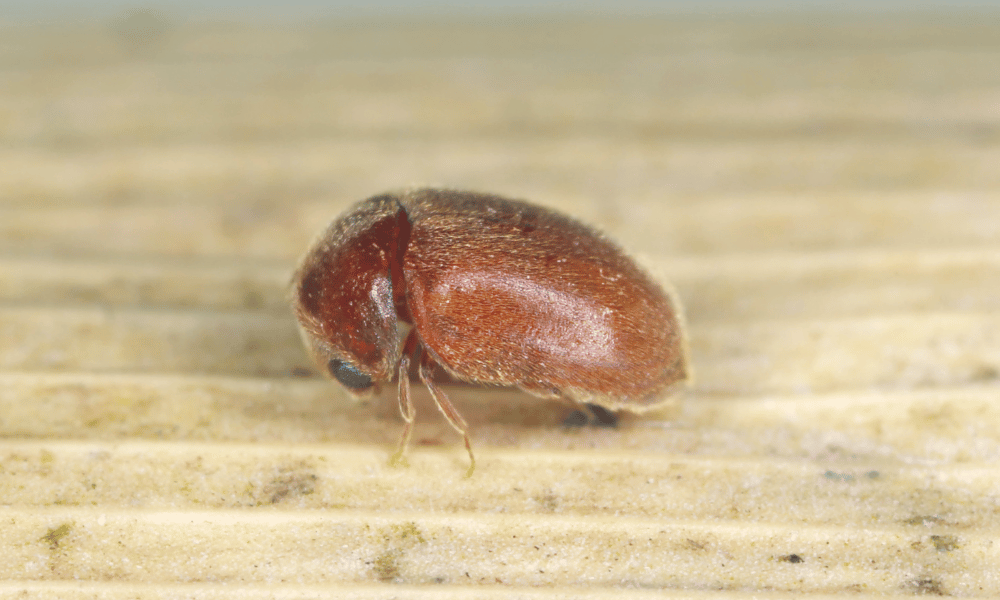
The tobacco beetle is a tiny insect destructive pest usually about 2-3 mm long, with a with an oval body, reddish-brown color of the body. distinctive feature is its serrated antennae, by which beetles are recognized with the name of serricorne. It’s limited to tobacco but also damaged a wide range of dried goods, e.g., grains, spices, and even books. Tobacco beetles can devastate inventories and lead to significant financial loss for manufacturers and retailers if left unchecked.
Mode of Damage:
These also contaminate the product with larvae and pupa eggs, and adults also produce spores for edible food materials. These beetles also consume cardboard, containers, and other things, Cocoon is often subjected to solid sites and creates infestations.
These also contaminate the product with larvae and pupa eggs, and adults also produce spores for edible food materials. These beetles also consume cardboard, containers, and other things, Cocoon is often subjected to solid sites and creates infestations.
Life cycle:
Consist of four stages: egg, larvae, pupa, and adult.
The life span of a tobacco beetle is almost 2–3 weeks, it also thrives, warmed and humid condition. The female lays almost 100 eggs, near a food source, typically directly on the outer surface of the leaf. After that, its larvae take 10 days to pupate at the border tip of leaves. Which is more responsible for further damage to dried material they feed voraciously? The larvae of the tobacco beetle, which are fully grown, are C shaped. After completing their larval stage, they enter into pupal stages, which last from 1 week to 1 month, and eventually emerge as adult beetles.
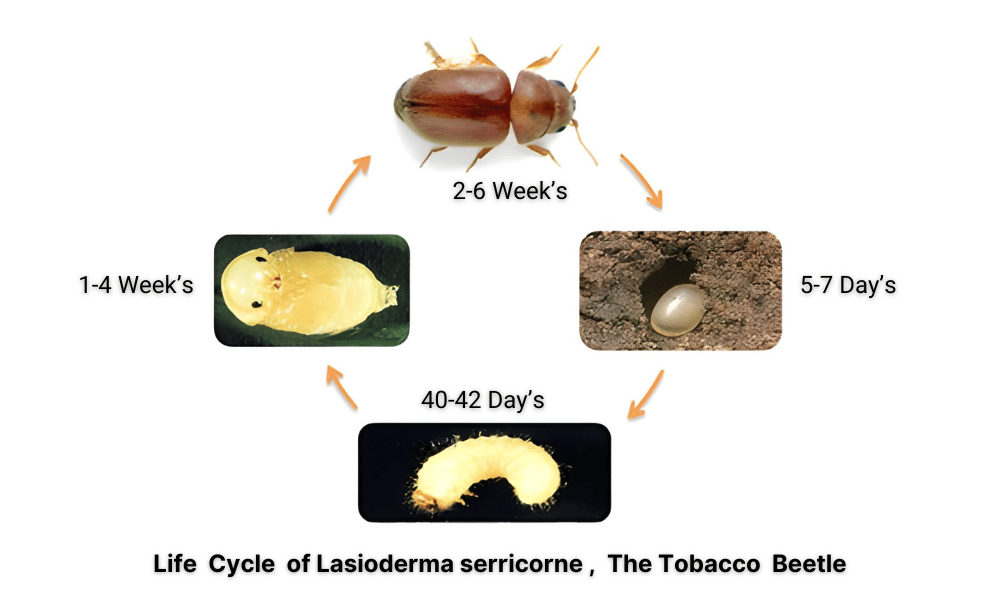
The adult tobacco beetle is about 2.5 mm long and light brown in color. It has a ‘humpbacked’ appearance from where its head is bent down. The back is covered in small hairs, and the antennae are jagged.
A Closer Look at Their Favorite Foods.
Despite their name, tobacco beetles aren’t picky eaters, for tobacco products, they have long affinity; their diet also includes
· Stored grain and cereal products
· Dried fruit and dried vegetables
· Pet foods, synthetic foods
· dried herbs and spices
· Nuts, seed grains
· Furniture and books, because the beetle also consumes the glue bindings into the books.
· Tobacco beetles also damage packaging material like paper and paper products and cardboard.
Is Your Stock Infested? Key Indicators of Tobacco Beetle Activity"
Some key signs to detect the infestation of the tobacco beetle in our stored products
1. Visible Beetles: The most obvious sign is seeing adult beetles in or near stored products.
2. Holes in Packaging: When you notice a small hole in their packaging, an attack of beetles has occurred, and they also have some tiny holes in cardboard, plastic, or paper.
3. Damaged Goods: Keep an eye on the stored products that have the risk of being damaged, particularly tobacco, grains, or spices. When larvae of the beetle feed or attack on these products, they leave their signs behind holes, tunnels, and dust-like debris.
4. Presence of Larvae: when there is an active infestation, then there might be the presence of the larvae also. These tiny white or cream-colored worms can often be found in the same location as the damaged goods.
Prevention and control of tobacco beetles
For managing the tobacco beetle, here are some important steps to follow that can be controlled. the tobacco beetles
1. Proper Storage: Store the valuable and susceptible products in proper storage that is not damaged by beetles, and beetles are not able to make any holes in storage material, such as glass or thick plastic. To ensure less infestation, keep the products in dry and cold conditions.
2. Regular Inspections: monitoring on the daily basis of beetle infestation places. Early detection can prevent a full-blown infestation.
3. Cleaning and Sanitation: clean all stored previous areas; make sure no debris or food products are left behind when you are doing the recent storage. To eliminate the hidden larvae and eggs, also vacuum in cracks and crevices.
4. Temperature Control: Beetles are more sensitive to extreme temperatures; controlling the temperature for 48 hours or heating them to 60°C (140°F) for several hours can kill both larvae and adults.
5. Pest Control Treatments: In cases of severe infestations, fumigation or chemical treatments may be necessary. Make sure the expert and safe professional during handling and fumigation
Conclusion
Tobacco beetles are small; if left unchecked, it can cause significant loss on the commercial scale, understanding its behavior, life cycle, and techniques of prevention can protect your goods better, by following all the above-mentioned steps, you can control these damaging beetles, maintaining product quality, and minimizing the loss. Vigilance against tobacco beetles is essential.
Follow us
Stay Connected
Subscribe to our newsletter for the latest updates on events, research, and certification programs.
- Admin Office
-
Entomological Society of Pakistan.
A-145, Akbar Road, Ghouri Town Phase-3
Islamabad 46000
- Phone : +(92) 318-5128617
- Email : Info@entosociety.pk
- Email : entosocietypk@gmail.com
Quick Links

Copyright © entosociety.pk. Created By RK-Marketing