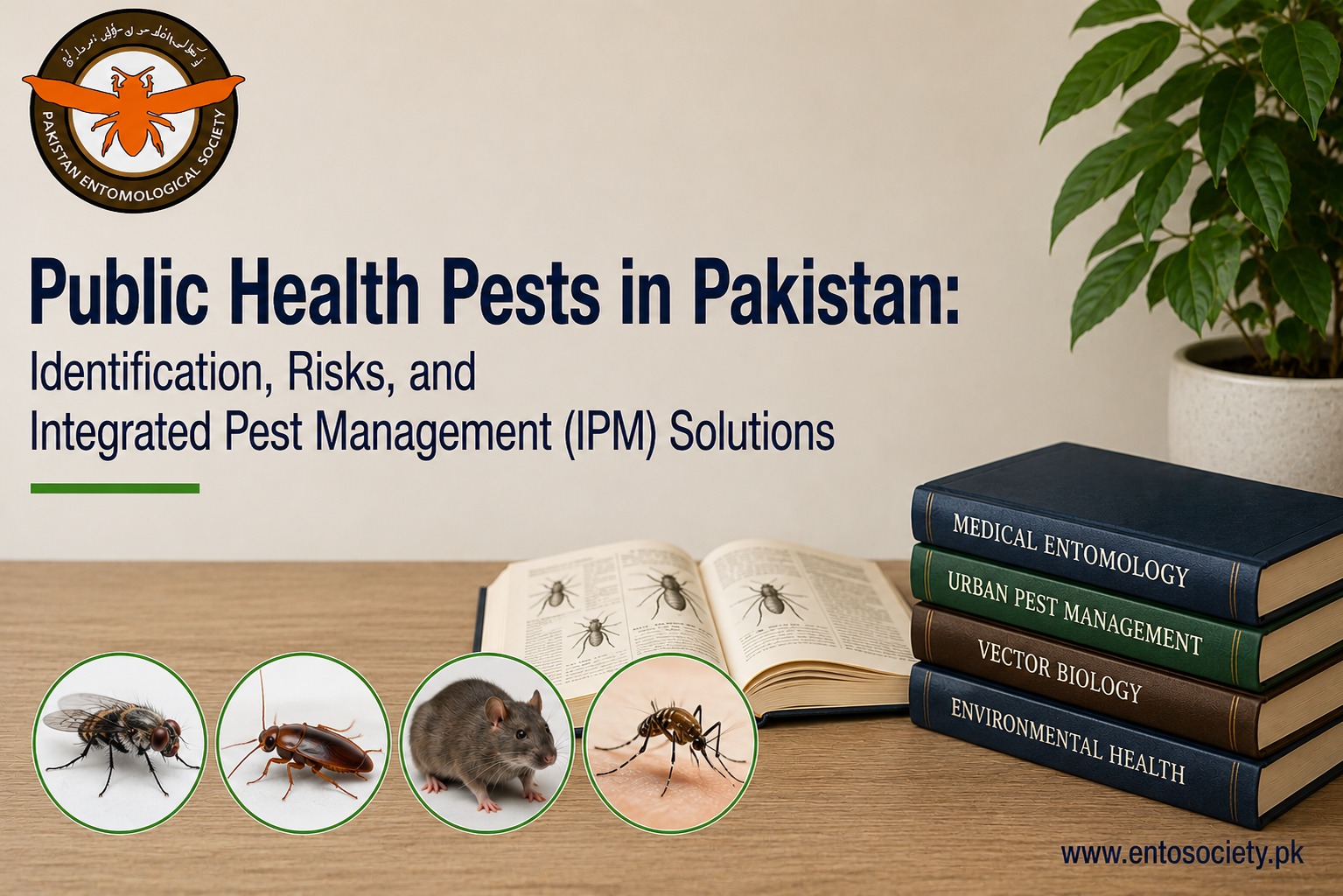
Pest public health is a serious danger for the overall health, sanitation, and infrastructure in Pakistan. The most common habitats for the presence of pests include domestic (house), commercial, healthcare, hospitality and food-handling premises, such as mosquitoes, cockroaches, rodents, flies and termites. It is those pests that may lead to contamination, disease transmission, property destruction, as well as creating unhealthy conditions, and therefore it becomes essential to have an effective pest management strategy in Pakistan.
The effects of public health pests can be found in homes, offices, hospitals, schools, restaurants, warehouses, and industrial sites. Pests are a threat to food safety, economic losses, and transmission of vector-borne diseases, especially when sanitation and waste management practices are inadequate and environmental conditions are right. Effective public health pest prevention measures are therefore very important in order to maintain safe and hygienic environments.
Pakistan Entomological Society (PES) is dedicated to advancing scientific knowledge and professional excellence. The PES encourages evidence-based management of public health pests in Pakistan through research, professional collaboration, technical training, workshops, conferences, and scientific publications. PES promotes the use of modern pest management techniques, which can contribute to protecting public health and to safe, sustainable, and environmentally responsible pest control.
In the mentioned strategies, Integrated Pest Management (IPM) is considered to be the best practice for the control of public health pests in Pakistan in the long term. Integrated pest management for public health pests includes the monitoring of pests, sanitation, exclusion of sources of pests, modification of the habitat, biological control, and the careful use of pesticides to ensure sustainable control.
What Are Public Health Pests?
Public health pests are those insects, rodents, and other organisms that can pose a danger to human life by causing various diseases and by making unhygienic conditions by contamination of food, damage to property and spread of disease etc. In Pakistan, the most common public health pests include mosquitoes, house flies, cockroaches, rodents, termites, and bed bugs.
The rise in public health pests in Pakistan has been associated with increasing urbanization, inadequate sanitation, poor waste disposal, stagnation of water, and increased population density. All these factors contribute to providing the ideal environment for breeding of these pests. Pakistan Entomological Society (PES) encourages IPM as the most practical and science-based way of keeping pests away from infestation.
Why Public Health Pests Are a Serious Problem in Pakistan
Public health pests are becoming more common in Pakistan due to multiple reasons, including environmental, social and operational factors. These conditions provide harborage, feeding and breeding places for disease vectors, which can lead to pest problem situations in residential, commercial, health care and industrial facilities. It is important to know these serious problem which are under below:
Improper Use of Pesticides
Misuse of pesticides is another problem that needs attention in Pakistan. The overuse of chemicals may result in pesticide resistance and contamination of the environment. The idea of IPM encourages the use of pesticides in a prudent manner, along with other control measures.
For example, the use of pesticides without identifying the target pest or according to the label requirements will not ensure proper pest control, but might also pose additional risks for human health and the environment.
Rapid Urbanization
The growing population of residential and commercial structures, sometimes lacking in pest prevention, has caused an increase. Construction, crowding and poor building maintenance provide conditions that are favourable to urban pests like rodents, cockroaches, termites, and flies.
Poor Sanitation
One of the common causes of pest infestation is poor sanitation. Pests at home and other public health pests feed on food particles, moisture, debris, and poor sanitation. High levels of sanitation are important parts of the pest prevention program.
Waste Accumulation
The unregulated disposal and accumulation of solid wastes attract flies, cockroaches, rats and other carriers of diseases. Excessive accumulation in dustbins, dumping sites and improper management of waste are sources of pests that could pose public health issues.
Water Stagnation
Mosquitoes, the vectors of dengue, malaria and other waterborne diseases, have ideal breeding grounds in standing water found in discarded containers, drains, construction sites, rooftop tanks etc. Eliminating standing water is one of the best public health pest prevention practices.
High Population Density
The population density in Pakistan is increasing, raising the need for houses, sanitation facilities, and waste management systems. The highly populated residential colonies and commercial buildings can serve as a source of vast food resources, shelter and breeding grounds for public health pests in Pakistan that may further speed up their population spread.
Common Public Health Pests Found in Pakistan
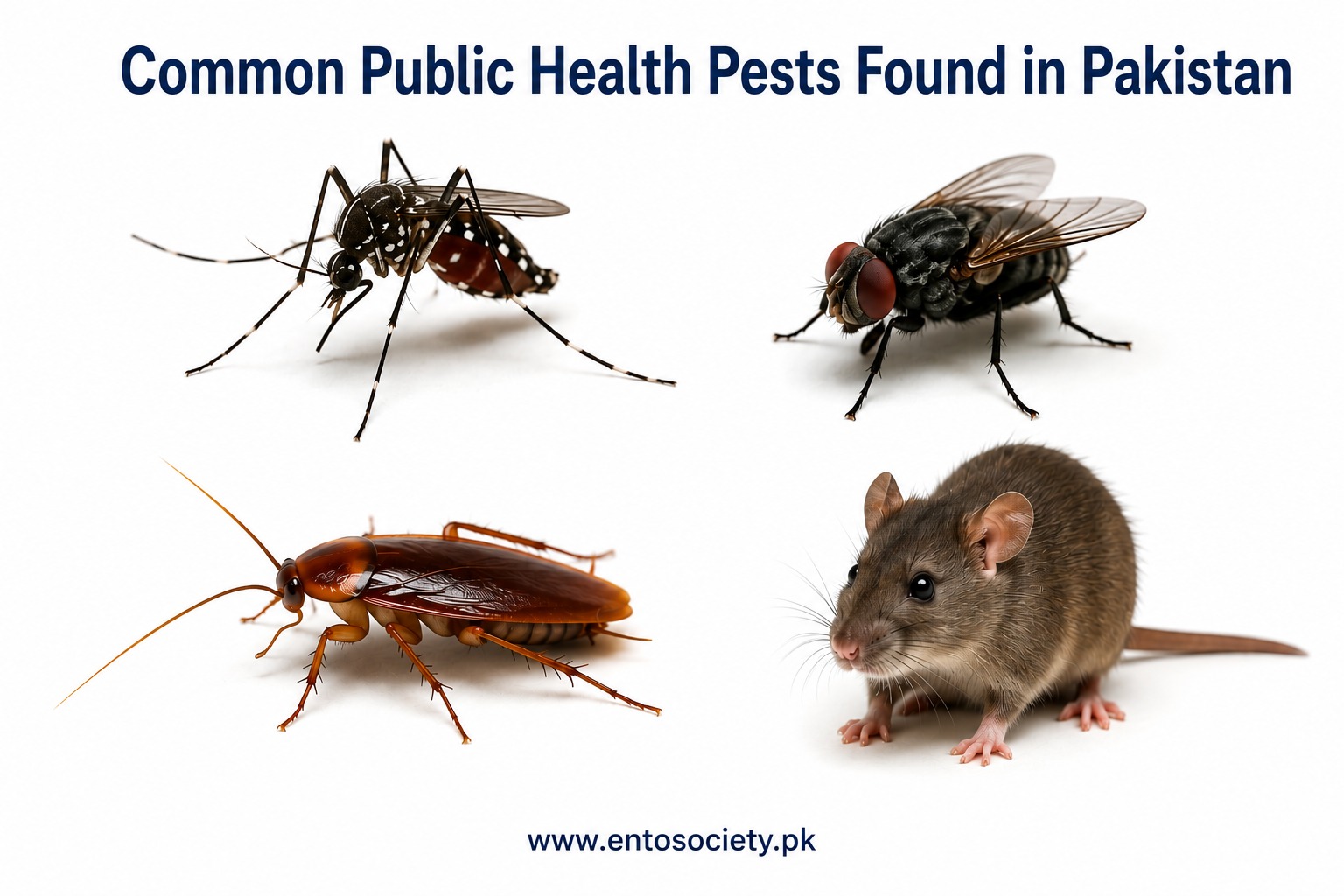
In Pakistan, public health pests are usually found in residential, commercial, health care facilities, and industrial premises. Proper identification is necessary for good monitoring and management of these pests. Public health pests are common in Pakistan, and the following are some of the most common pests;
Mosquitoes
Mosquitoes belong to the Family Culicidae, are small, slender insects, have long legs, two narrow wings, and a long, distinct proboscis. They go through four distinct stages: egg, larva, pupa, and adult, and are distinguished into species by their markings, resting position and breeding grounds.
Houseflies
Houseflies are medium-sized flies with a grey body, a set of four dark stripes on the thorax and large reddish compound eyes. One of the most common flies found in human habitats is the sponging mouth parts and quick breeding nature of the fly.
Cockroaches
The cockroach (Order: Blattodea) has an oval flattened body, long antennae and robust legs which are adapted to fast movement. Some species, like the German and American cockroach, can be differentiated by body size, colour and markings.
Bed Bugs
Common bed bugs (Cimex lectularius) are small, wingless, reddish-brown, round, flattened bugs. Adults are broad-bodied and have piercing-sucking mouth parts, and are approximately apple-seed sized.
Rodents
House mouse (Mus musculus), Norway rat (Rattus norvegicus) and roof rat (Rattus rattus) are the most prevalent rodents in Pakistan. They are recognized by their continuously growing incisors, their long tails and their powerful gnawing and by their differences in body size, ears and tail size.
Diseases Associated with Public Health Pests
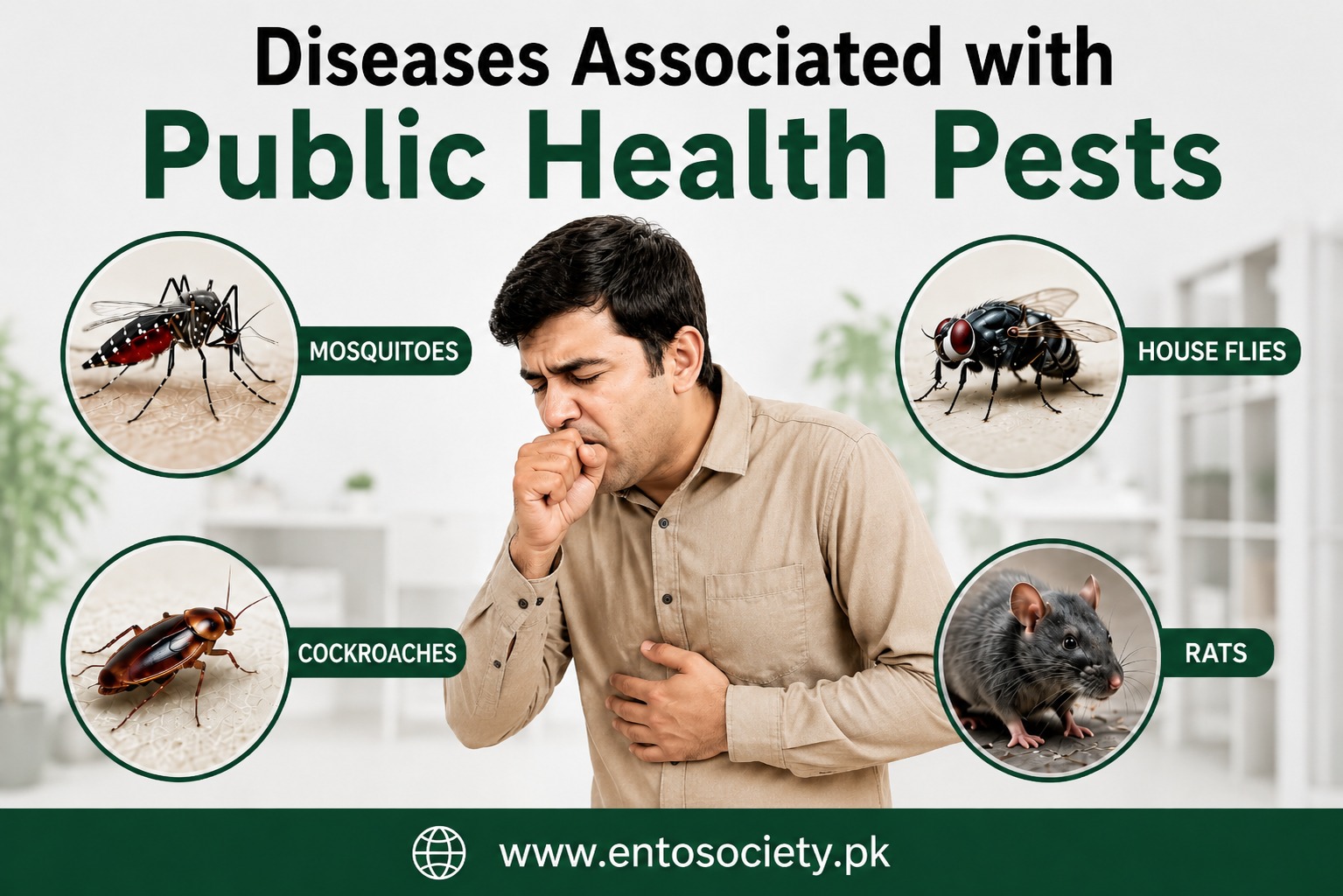
A large number of diseases are transmitted or caused by public health pests in Pakistan that impact human health. An effective Integrated Pest Management (IPM) program aims to reduce pest numbers and the potential for disease transmission through IPM principles of prevention, monitoring, sanitation and responsible control.
Dengue
Dengue is a mosquito-borne viral illness which is mainly spread by Aedes mosquitoes. It results in high fever, very bad headache, muscle pain, and, in severe cases, haemorrhagic fever.
Malaria
Transmitted by infected Anopheles mosquitoes, malaria is one of the most important public health problems in many parts of Pakistan. Symptoms include fever, chills and tiredness.
Typhoid
Typhoid fever is caused by bacteria which may be transmitted to food and contaminated drinking water by houseflies if they come in contact with organisms in unclean surroundings.
Cholera
Poorly treated food and water are associated with the outbreak of cholera. House flies can be vectors to spread the bacteria from waste to food preparation areas.
Allergies and Asthma
The cockroach allergen and rodent debris can cause allergic reactions in children and people who suffer from respiratory diseases and aggravate their asthma.
Hantavirus
While Hantavirus infections occur infrequently in Pakistan, rodents can transmit viruses that may be harmful to human health. Preventative measures include avoiding contact with rodent droppings and good rodent control.
Integrated Pest Management (IPM) Solutions for Public Health Pests
IPM is a combination of preventive, cultural, mechanical, biological and chemical control practices to bring about long-term pest control while reducing potential risks to human health and the environment.
Inspection
Pest activity, entry points, breeding sites, and conditions that will facilitate pest infestations can be detected through regular inspections before the infestation becomes critical.
For example, kitchen water pipes, sink drains, and wall cracks should be inspected regularly to identify any signs of cockroaches.
Monitoring
Visual inspections, traps and surveillance tools should be used to monitor pest populations to assess pest activity and the effectiveness of pest control.
Example: Cockroach monitoring can be done using glue traps/cockroach gel in food preparation zones.
Identification
Correctly identifying pest species is critical to choosing the best and most focused control tactic.
Example: Bed bugs can be identified by inspecting mattress seams, headboards, and furniture cracks for live bugs, eggs, shed skins, and black fecal spots.
Sanitation
Cleanliness, waste disposal and removal of food and water sources decrease pest problems.
Example: Emptying garbage bins daily and cleaning food residues helps prevent housefly infestations.
Exclusion Methods
Sealing cracks & gaps, fixing doors and windows and screening buildings will keep pests out.
Example: Seal gaps around doors, utility pipes, and wall openings to prevent rats and mice from entering buildings.
Habitat Modification
Draining, tidying and eliminating harborage areas make a more inhospitable environment for pests to survive and reproduce.
Example: Discarding any stagnant water will make the environment unsuitable for mosquito breeding.
Biological Controls
Natural enemies and biological agents may be employed to control pest populations, if appropriate, without relying on chemical pesticides.
Mechanical Controls
Mechanical techniques like traps, bait stations and physical barriers are used to control pests and do not require large amounts of pesticides.
Safe Chemical Applications
Pesticides should be used responsibly by trained technicians, according to the label instructions and IPM guidelines.
Preventing Public Health Pest Infestations
Prevention of pest infestations is a practice that ensures that any organisms or pests that may cause problems are kept out of an environment through preventing their entry and existence within it. Prevention of pest infestations includes management of waste, removal of food or water sources for the pests, and closure of entry points.
Waste Management
Properly dispose of trash; clean garbage bins regularly; don’t allow waste to build up to decrease breeding and feeding areas for pests. This will help prevent pests from entering your premises.
Food Storage
Store food in covered containers and clean surfaces where food is prepared and clean up any spillage of food as soon as possible to prevent attraction of pests like cockroaches and rodents.
Water Management
Eliminate any water source which may be used by mosquitoes to breed or lead to excessive water accumulation, and repair all leaking water pipes.
Sealing Entry Points
Close all gaps and cracks in doors, windows and utility lines.
Routine Inspection
Regularly check for early signs of pest activity and to deal with potential pests before infestations take hold.
Community Awareness
Public health pest prevention is promoted by educating communities on sanitation, pest prevention, and Integrated Pest Management (IPM) so that communities can contribute to this pest prevention.
To encourage science-based Integrated Pest Management (IPM) practices which may prevent pest infestations and preserve healthy structural surroundings and public health, Pakistan Entomological Society (PES) promotes this way of tackling the pests.
When Should You Contact Professional Pest Management Experts?
Proper sanitation and prevention procedures will help in reducing the activities of pests, but some cases will require professional help. However, if acted upon immediately, the health hazard, property damage, and loss of business can be prevented.
Commercial Facilities
Office blocks, shopping malls, hotels, and retail stores should contact pest management professionals when pests are frequently sighted or when the pests start interfering with their regular activities.
Example: When cockroaches are frequently seen in office kitchens or hotel rooms, the need for professional pest management is indicated.
Hospitals
Hospitals should call pest management experts once there is the sighting of any pest in order to ensure patient, visitor, and healthcare worker safety and strict hygiene standards.
Example: The presence of a single cockroach or even a housefly in a patient care area is something that needs urgent professional attention.
Schools
Schools should call pest management professionals whenever pests affect the well-being of students and school staff members.
Example: Pests such as rats or cockroaches sighted in classrooms or school canteens should be reported immediately.
Restaurants
When pests are sighted in restaurants, the need for pest management services becomes urgent in order to avoid contamination of foods and protect the reputation of restaurants.
Example: Sightings of cockroaches, houseflies and rodents in food preparation areas should receive urgent professional attention.
Warehouses
Warehouses need to consult professional pest control companies immediately whenever there is any indication of rodent activity or stored product insect infestation. This can help in avoiding contamination of the product and loss of money.
Example: Presence of rodent feces or infestation by khapra beetle, rice weevil, red flour beetle or cigarette beetle in stored product.
Why Integrated Pest Management Is Better Than Traditional Pest Control
Integrated Pest Management is a superior method as compared to conventional methods since it tackles the underlying cause of infestation instead of using chemical pesticides alone. This is a more sustainable way of solving pest problems because it integrates prevention, monitoring, and treatment in order to come up with solutions.
Long-Term Effectiveness
The use of preventative measures such as inspection, monitoring, and correction gives long-term pest control.
Reduced Pesticide Use
This is an effective method of limiting exposure to pesticides and minimizing the development of pest resistance to them.
Environmental Protection
The use of non-pesticide treatments ensures protection of the environment and useful pests in it.
Human Safety
IPM keeps people safe from any harm by advocating for the responsible use of pesticides.
Cost Efficiency
Prevention and early detection of problems will save the cost that would otherwise be incurred from structural damages and reapplication of pesticides.
Sustainable Pest Management
IPM is an environmentally friendly approach to pest control in Pakistan that involves sanitation, habitat modification, pest monitoring and treatments.
Integrated Pest Management (IPM) is advocated for structural pest management and public health pest control by the Pakistan Entomological Society (PES).
Frequently Asked Questions
Common public health pests in Pakistan include mosquitoes, house flies, cockroaches, rodents, termites, and bed bugs. These pests have the potential to cause the transmission of diseases, contamination of food, property destruction, and an unhealthy environment.
IPM (Integrated Pest Management) is suggested due to the following reasons: it consists of inspection, monitoring, sanitation, exclusion, and treatment strategies. It offers lasting solutions to pest problems and helps reduce excessive use of pesticides.
Public health pests are an important factor in the transmission of many diseases such as Dengue, Malaria, Typhoid, Cholera, Leptospirosis, and foodborne diseases. They can also release allergens and be a cause of asthma because of their response to pest allergens.
Homeowners can prevent pest problems by using good sanitation, proper food storage, removal of standing water, sealing up entryways, proper disposal and implementing a regular inspection and Integrated Pest Management (IPM) programme.
A professional pest management company should be hired when pests continue to recur, when the infestation is very widespread, or when pests are discovered in restaurants, hospitals, schools, food industry operations, warehouses, or any other business premises where IPM solutions are essential.
Conclusion:
Public health pests are a serious threat to structural environments, food safety and human health in Pakistan. To prevent and manage pests in a timely manner to minimize disease spread and keep living and working environments safe and sanitized.
IPM is an environmentally friendly, science-based, and sustainable solution that includes prevention, monitoring, sanitation, and strategic pest control. The Pakistan Entomological Society (PES) encourages using IPM to maintain pest-free environments in Pakistan.
