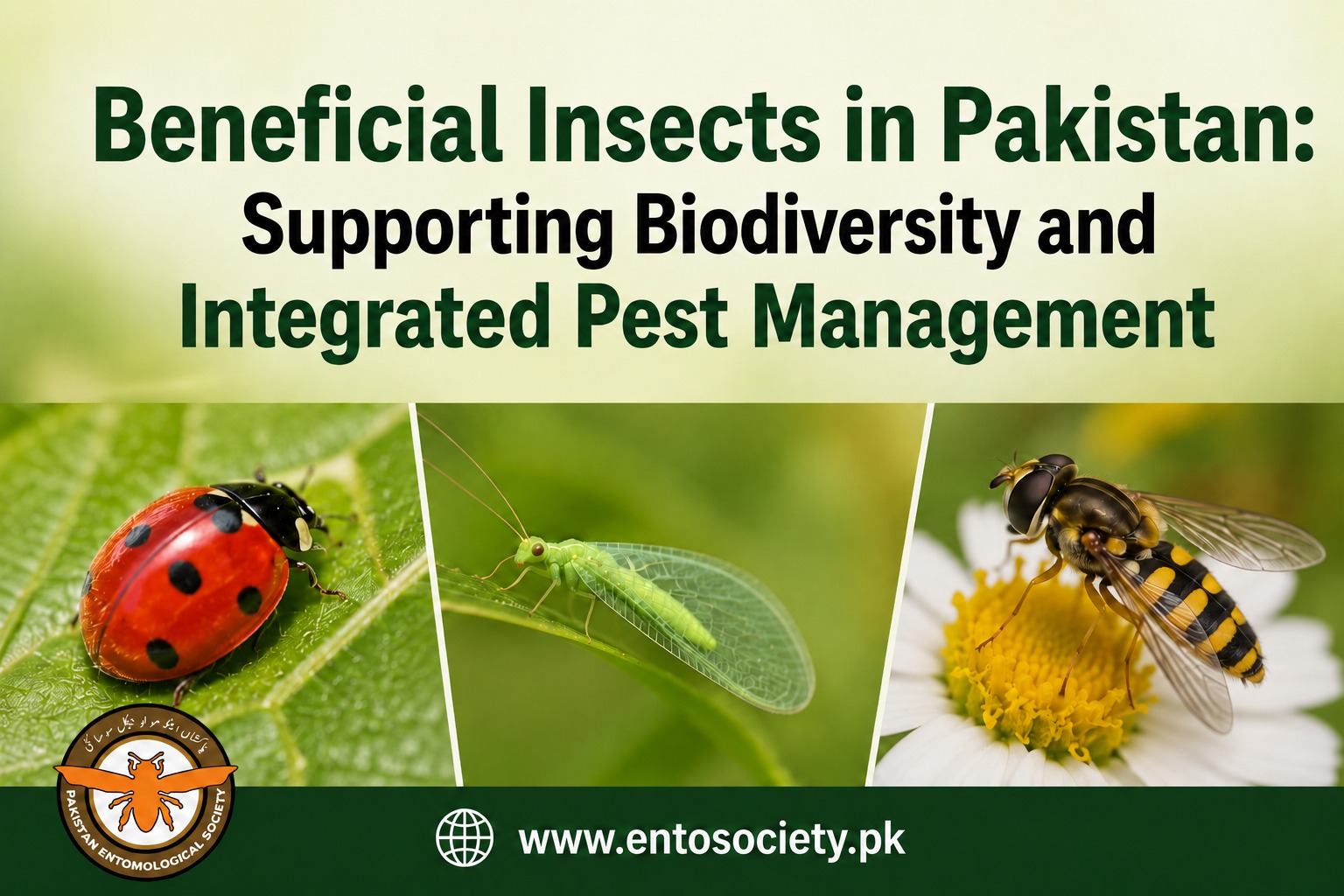
Benefits of insects that are useful for agriculture include the pollinating species like honey bees, hoverflies, and butterflies. Honey bees perform about 80% of the pollination process in insects, while the pollinating insects pollinate around 75% of the most important food crops of the world, along with almost 90% of the wild flowering plant species. The useful insects not only increase crop yield and improve the quality of products but also decrease the use of pesticides and make the ecosystem healthy. These benefits highlight the important role of beneficial insects in Pakistan in supporting sustainable agriculture and healthy ecosystems.
Beneficial insects are an integral component of the ecosystem and agriculture sector of Pakistan. Predators and pollinators such as ladybugs, lacewings, parasites, bees, and hoverflies are beneficial for the ecosystem and increasing production.
With the move of Pakistan’s agriculture into sustainable agriculture, the role of beneficial insects becomes increasingly significant. These insects can help in controlling insects and can decrease the excessive use of pesticides for protecting the crops. Conservation of these insects is very essential to keep the rich insect biodiversity of Pakistan and long-term sustainability in agriculture.
The Pakistan Entomological Society (PES) is one of the leading scientific societies for promotion of entomological research and education, and public awareness. PES conducts research, training and outreach for implementation of science-based IPM principles and conserves beneficial insects to support the conservation of biodiversity and sustainable agriculture in Pakistan.
Beneficial Insects of Pakistan
Beneficial insects of Pakistan are the insects which help agriculture and environment by pollinating the crops, providing natural pest control and maintaining environmental balance. Some of the beneficial insects that have importance in their own ecosystem include ladybugs, lacewings, parasitoid wasps, bees and hover flies.
The difference between insect pests and beneficial insects is that while pest insects damage crops and transfer diseases in plants, the beneficial insects help in protecting plants in the form of natural predators and natural pollinators. The presence of such insects will help in reducing the number of pests and increased crop production without any harmful pesticides.
Common Beneficial Insects Found in Pakistan
Beneficial insects in Pakistan have an important place in the field of agriculture, crop safety and biodiversity management as well as sustainable agriculture. The role of beneficial insects in providing ecosystem services through controlling agricultural pests, pollinating crops, and maintaining ecosystem balance is very important. The following are some examples of the most common beneficial insects that exist in Pakistan:
Ladybugs
Ladybugs are very famous natural predators as they consume aphids, whiteflies, mealybugs, and other soft-bodied insects. They serve as an important component of integrated pest management and are very important biological control agents.
Honey Bees
Bees are very vital pollinators of Pakistan. They provide the service of pollinating fruits, vegetables, and oilseed crops.
Lacewings
Lacewing larvae are very good predators of aphids, whiteflies, thrips, and mites. They are very helpful in the control of different crop pests in Pakistan.
Hoverflies
Benefits of hoverflies occur throughout their lives as the adults help in the pollination process of flowers while their larvae feed on aphids and other soft-bodied pests.
Dragonflies
Dragonflies are efficient predators that feed on mosquitoes and other flying insects. Through their natural predation processes, they help reduce these populations.
Praying Mantises
Praying mantises eat up a number of insect pests like caterpillars, grasshoppers, flies, etc. They help in the control of pest populations and maintain a healthy agroecosystem.
Parasitoid Wasps
Parasitoid wasps lay their eggs in or on pest insects such as aphids, whiteflies, caterpillars, mealybugs, and scale insects, eventually killing these pests. They make good biological control agents and play an important role in IPM programs.
The Pakistan Entomological Society (PES) creates awareness regarding beneficial insects of Pakistan through research, education and awareness creation, conservation of these insects in sustainable agriculture, insect biodiversity conservation and science-based pest management.
Why Beneficial Insects Matter?
Insects that are beneficial are essential to crop protection, biodiversity protection and healthy ecosystems. Their natural activities promote agriculture in an environmentally responsible manner, and contribute to the enhancement of long-term agricultural productivity.

Natural Pest Control
The ladybird beetle, lacewing and parasitic wasps are natural enemies that assist in managing pest insects in farming practices. These insects are used in biological pest control and are also likely to be used in integrated pest management.
Pollination of Crops
The honeybee, the hoverfly and many other insects are important in the production of crops as they transfer pollen from one flower to another. This causes fruits and seeds to be produced, thereby increasing production.
Maintaining Ecological Balance
Beneficial insects are good, provide a balanced ecosystem, and help control insect populations. They help sustain healthy food webs, which benefit the agricultural and natural environment.
Supporting Biodiversity
It is important to conserve helpful insects in order to promote the biodiversity of insects in the ecosystem in Pakistan.
Reducing Dependence on Chemical Pesticides
Crop pests are naturally controlled by beneficial insects, thus limiting the need for frequent pesticide application. This will not eliminate pest injury but will keep pest numbers down and below economic injury levels. This helps in natural pest control, encourages environmentally friendly pest management and encourages safer and sustainable farming practices for Pakistan’s people and environment.
Threats Faced by Beneficial Insects in Pakistan
There are several challenges to overcome as beneficial insects in Pakistan are facing, which pose a threat to their existence and ecological services.
Excessive Pesticide Use
The disadvantages of over-application of pesticide chemicals are that all insects are killed, including beneficial insects like bees, ladybugs, lacewings and hoverflies. This is a challenge to the IPM process because it requires maintaining the beneficial insects.
Habitat Loss
Grasslands, natural vegetation, flowering field margins and Hedgerows are habitats suitable for insects to shelter, feed and breed from, which are affected by urbanisation and deforestation.
Climate Change
The changes in the climate and unusual rainfall or extreme weather conditions affect the life cycle and activities and distribution of insects such as honeybees, bumblebees, ladybugs, and lacewings. It is difficult for many insect species to cope with such changes and thus their ability to perform their ecological roles becomes difficult.
Pollution
Beneficial insects like honey bees, butterflies, hover flies, and lady beetles suffer from pollution of air, water, and soil. This has a negative effect on their survival and biodiversity.
Unsustainable Farming Practices
Diversity in agriculture and over-tilling and excessive use of agrochemicals are harmful for the diversity of habitats and natural predators of insects. There is a need for sustainable farming practices and preservation of natural habitats for the conservation of insects in Pakistan.
How we can protect beneficial insects?
The conservation of useful insects is vital in the context of biodiversity, increased crop productivity and sustainable farming in Pakistan. Simple but effective practices can be implemented by everyone, including farmers and communities.
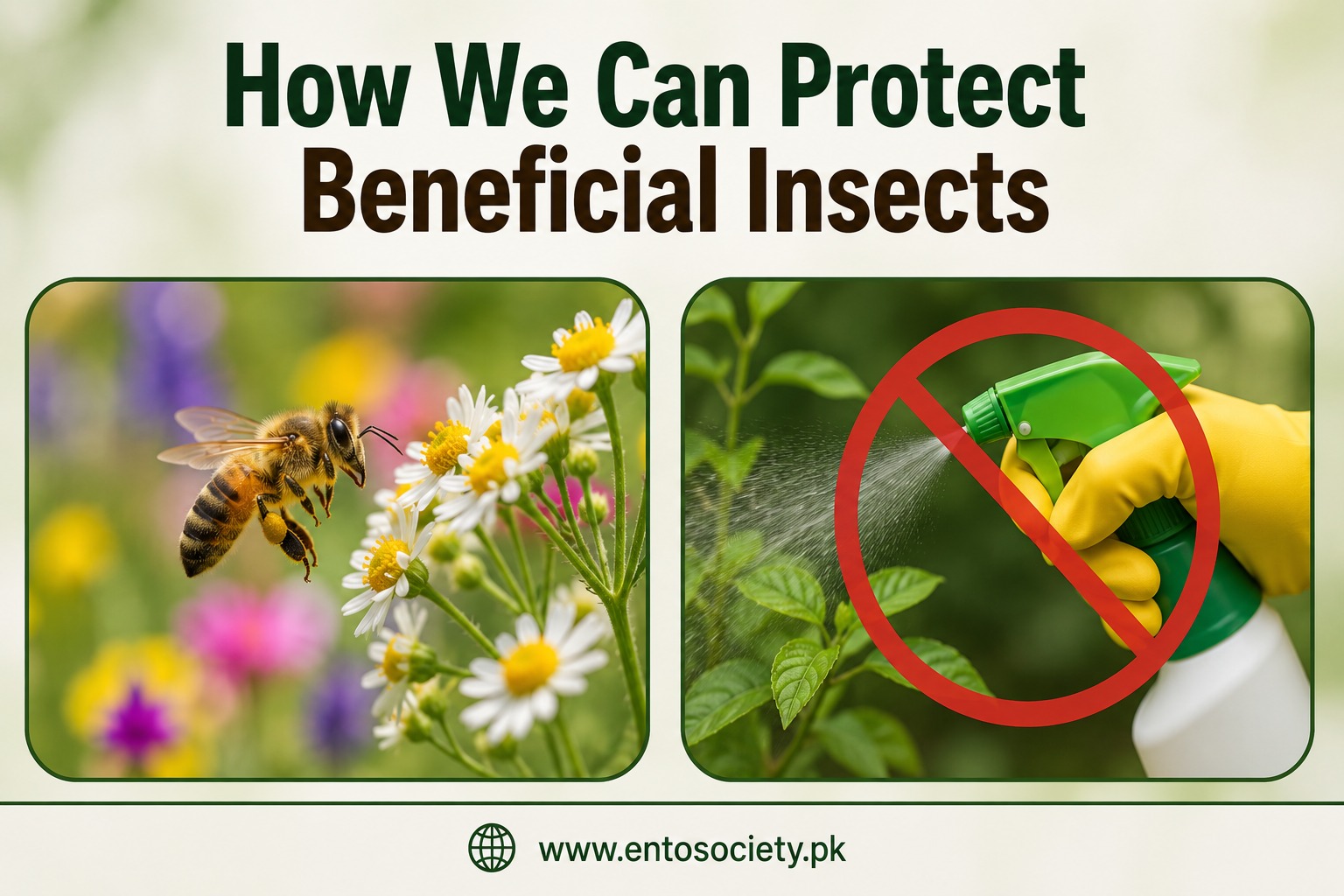
Growing Flowering Plants
We need to grow some flowering plants like sunflower, marigold, cosmos, mustard, and basil. These plants give the bees nectar and pollen, which are helpful in increasing the population of honey bees, butterflies, hoverflies, lacewings, and parasitoid wasps.
Avoid Overuse of Pesticides
Use pesticides only when required. This will help protect the beneficial bugs, as well as save the environment from damage.
Promotion of IPM
Integrated Pest Management is an approach that involves monitoring of pests, biological pest control, cultural techniques, and pesticides safely. The approach could be useful in safeguarding pests using natural ways in Pakistan.
Protect Natural Habitats
It is important that natural habitats like hedgerows, meadows, and flowering edges of fields be conserved to help beneficial insects have a source of food, shelter, and breeding grounds.
Raise Awareness About Insect Conservation
Agriculture workers should be taught about the significance of beneficial insects and biodiversity. The Pakistan Entomological Society is an organization that helps in the conservation of insects through education and awareness.
Frequently Asked Questions (FAQs)
Beneficial insects refer to insects that are helpful by pollinating plants, keeping pests away, and maintaining healthy ecosystems.
Ladybugs, honey bees, lacewings, hoverflies, dragonflies, praying mantis, and parasitic wasps are some of the beneficial insects that are widely seen in Pakistan.
Beneficial insects have the ability to control pests, provide good pollination, and minimize the use of pesticides by farmers.
Pollinators such as honey bees and hover flies ensure that the plants produce fruits and seeds. This increases agricultural output and productivity.
Farmers can encourage and conserve beneficial insects by planting flowering plants, protecting their natural habitats, minimizing the use of chemical pesticides, and adopting IPM practices. These measures help beneficial insects naturally control pest populations and reduce crop damage.
Conclusion
Beneficial insects in Pakistan are very important in the field of sustainable farming, preservation of biodiversity, and healthy ecology. Beneficial insects are the natural enemy of crop pests and natural pollinators and play their part in ecological equilibrium in our environment.
IPM and sustainable methods of agriculture can be used to save beneficial insects and reduce chemical pesticide use. The Pakistan Entomological Society (PES) is promoting conservation of beneficial insects in Pakistan through awareness, education, and sustainable pest management practices.
