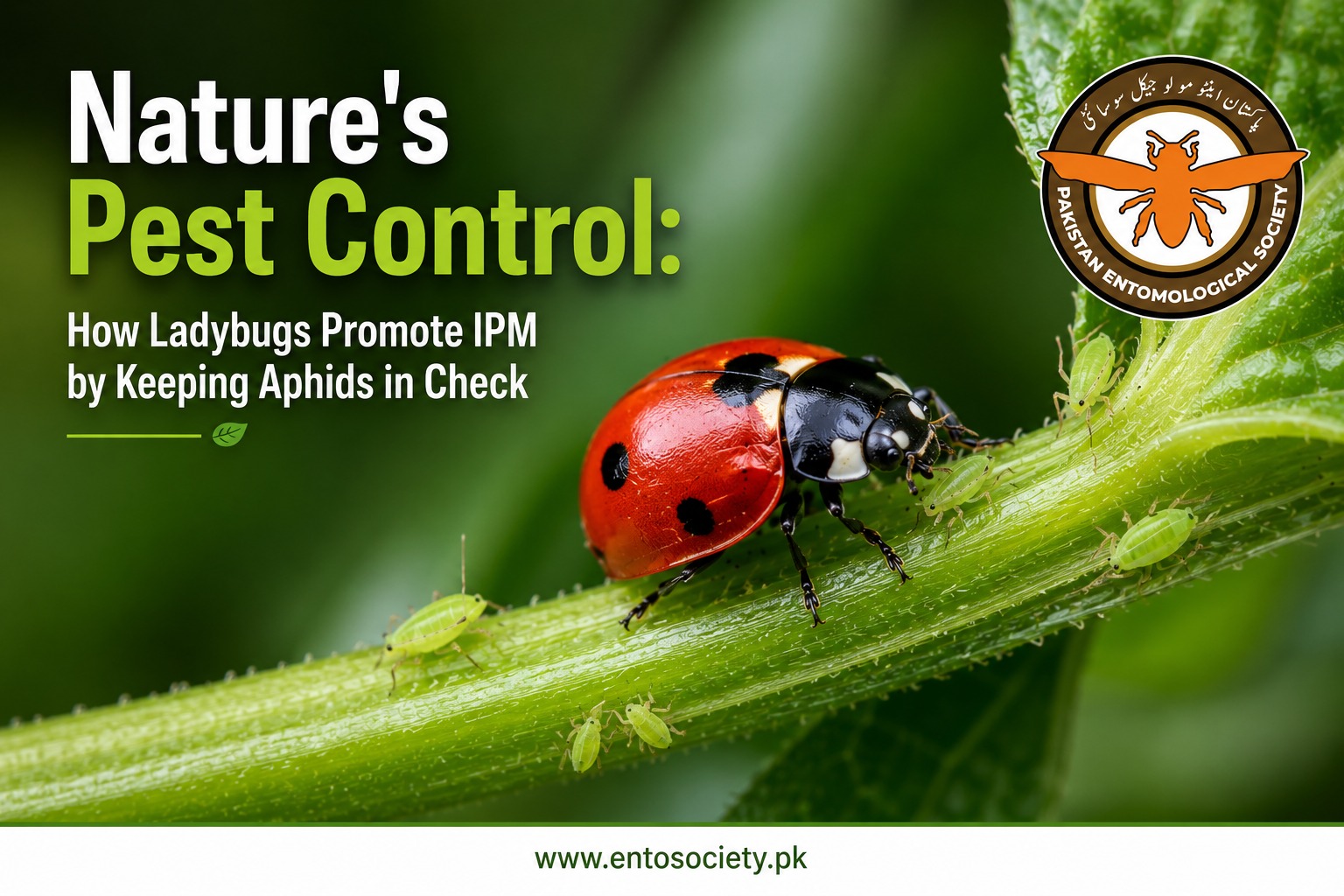
Aphids are one of the most harmful pests of agriculture, consuming plant sap and infecting plants with diseases. They reproduce quickly and can seriously affect the quality and yield of the crops, and so sound pest management is essential in order to protect crops successfully. In this context, ladybugs promote IPM naturally by feeding on aphids and helping keep their populations under control without relying solely on chemical pesticides.
The use of pesticides for the control of aphids is common; however, excessive use can cause harm to other species and pose problems like the development of pesticide resistance. IPM suggests the application of a more environmentally friendly method of using a combination of monitoring, prevention, and biological pest control.
The ladybugs are among the best natural enemies of the aphids. The ladybugs are very efficient insect predators that can be used to naturally regulate aphids. This is an excellent example of how the ladybugs can be used to control pests in a natural way.
The Pakistan Entomological Society (PES) is an organization dedicated to creating awareness about the benefits of insects like ladybugs and the role that they play in sustainable pest management. By doing entomological research and scientific education, PES shows how ladybugs promote IPM by being good biological agents of control of aphids and other agricultural pests. In addition, PES stresses the importance of natural enemies of pests in integrated pest management.
Understanding Ladybugs and Their Ecological Role
What Are Ladybugs?
Ladybugs have a smooth convex body and short clubbed antennae and are small beetles 1-10 mm long. Most species are brightly coloured, often red, orange or yellow with black spots, but can be black with red or yellow markings. The insects are referred to using different names depending on the location they are from: ladybugs, lady beetle, ladybird or lady beetles. They are members of a family named Coccinellidae, in the order Coleoptera. In the world, there are more than 6,000 species of ladybugs, the majority of which are useful because they are used to control pests for agricultural production.
Why Ladybugs Are Considered Beneficial Insects
The life cycle of ladybugs includes eggs, larvae, pupae, and adults. Both larvae and adult ladybugs act as predators of pests like aphids, whiteflies, and scales, among others. A ladybug feeds on hundreds of aphids and is one of the most efficient predators in the field of natural pest control.
Benefits to agriculture, pest management, and conservation of biodiversity of ladybugs in sustainable agriculture are through the reduction of dependency on insecticides.
Complete Life Cycle of Ladybugs
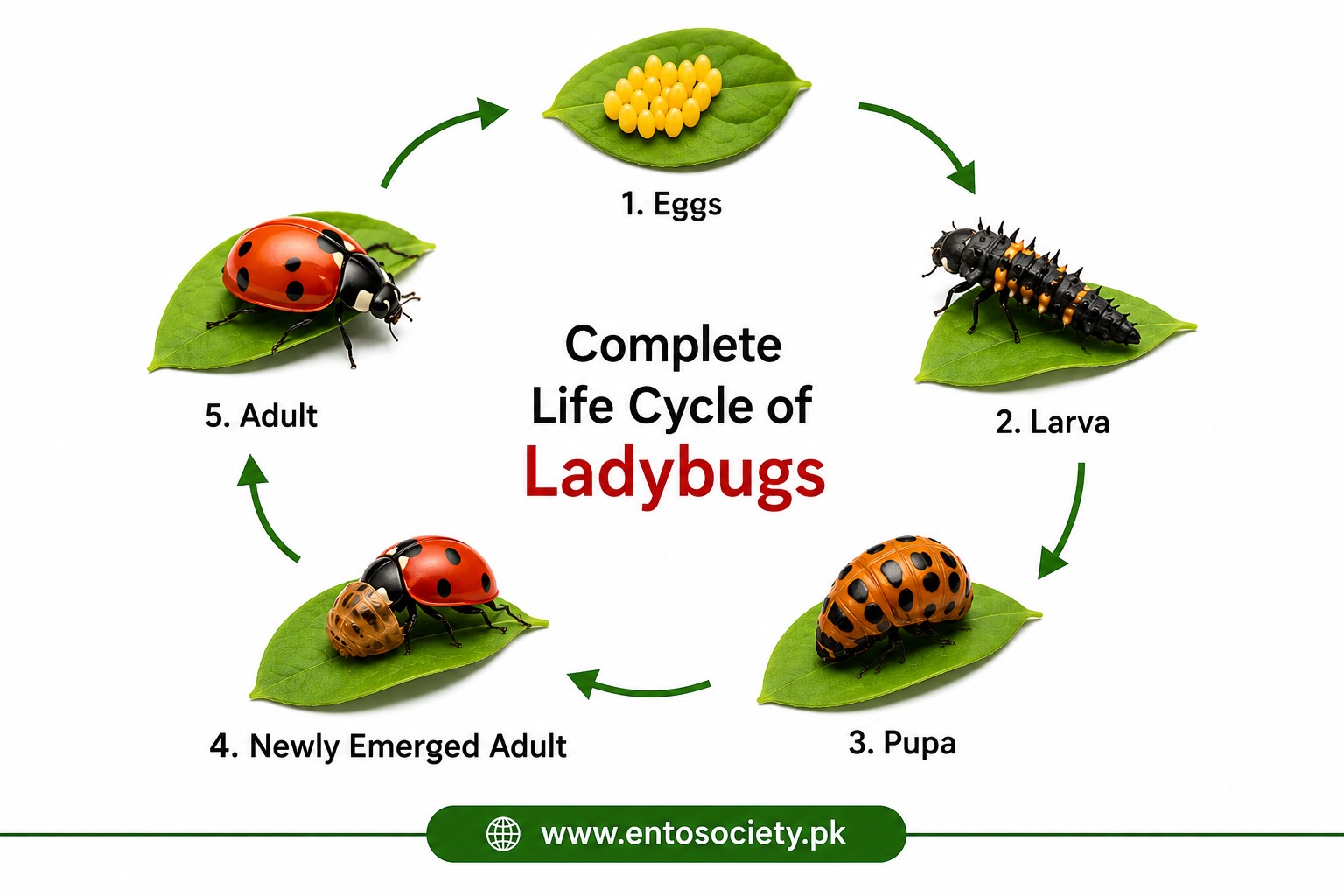
Complete metamorphosis refers to the 4 phases of development that a ladybug goes through: egg, larva, pupa, and adult. The life cycle typically takes 3–8 weeks, depending on the environmental conditions.
- Egg Stage
Yellow or orange, they are laid in clusters on the underside of leaves, often close to a colony of aphids so that food can be provided to young ladybugs for their first meal.
- Larval Stage
The ladybug larva is an active predator that feeds on aphids, whiteflies, and other such pests. This is significant for biological pest management.
- Pupal Stage
Once the larva has finished feeding and growing, it attaches itself to a leaf or stem and develops into a pupa. In this phase, it turns into an adult ladybug.
- Adult Stage
After feeding and completing its growth period, the larva develops into a pupa and attaches itself to a stem or leaf. This stage sees the development of the adult ladybug.
Why Are Aphids a Serious Agricultural Pest?
- How Aphids Damage Crops
Aphids are small, sap-feeding agricultural pests that feed on plants by sucking the nutrients from the leaves, stems, and young shoots. In severe cases, plants have stunted growth and their leaves roll up, turn yellow, and yield poorly. Another pest problem is that aphids may carry plant viruses, which can also cause adverse results on crop health and quality.
- Crops Commonly Affected by Aphids
Aphids are a problem on a variety of crop species, such as vegetables, fruits, cereals and ornamentals. The most frequent host plants are wheat, cotton, maize, potatoes, tomatoes, peppers, cucumbers and many fruit crops. They multiply rapidly, making early detection and effective pest management important.
- Economic Impact on Farmers
Aphids lead to reduced vigor of the plant, poor quality of crops and increased cost of production. Further costs may arise for farmers as a consequence of repeated usage of pesticides. IPM, biological control of pests and conservation of natural enemies such as ladybirds will reduce aphid damage.
Benefits of Using Ladybugs in Integrated Pest Management
In an integrated pest management strategy, the use of ladybugs is a sustainable way of managing soft-bodies pests such as aphids. The use of these biological control organisms is useful in reducing the use of pesticides while improving the environmental situation. The predatory role of ladybugs assists in maintaining the ecological balance, as well as protecting beneficial insects and pollinators.
The use of ladybugs reduces the chances of developing pesticide resistance because of reduced use of chemical pesticides due to their role in controlling aphids. Use of ladybugs increases crop health and productivity, and also provides sustainable ways of protecting crops. The conservation of these biological control enemies promotes biodiversity and sustainable agriculture.
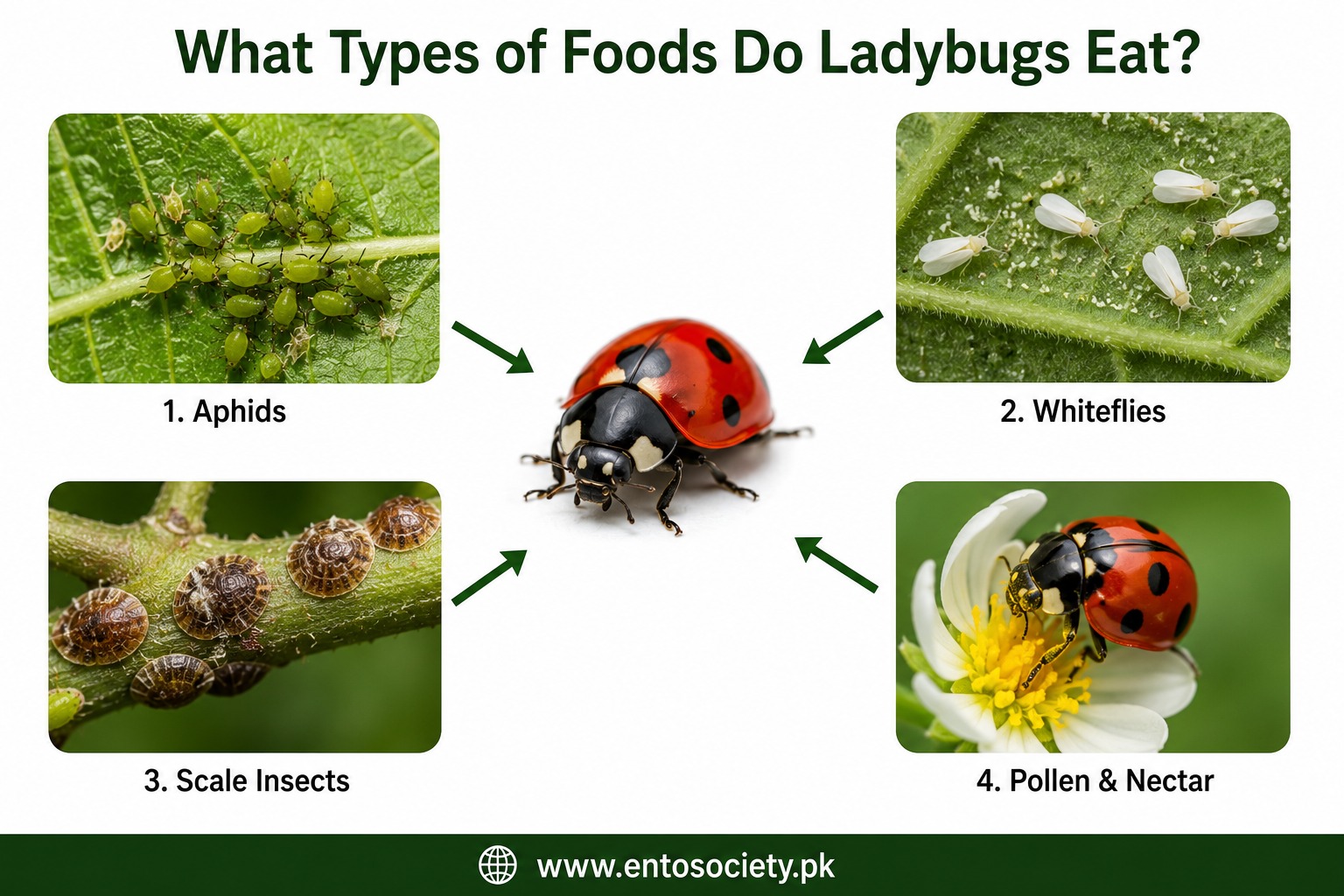
What Types of Foods Do Ladybugs Eat?
All ladybugs have a predatory nature and eat soft-bodied insects such as aphids. Some species of ladybugs eat whiteflies, scale insects, and other such small insects. In addition to these insects, some species might feed on pollen, nectar, and fungi if there is a lack of insect prey.
How Farmers Can Encourage Ladybug Population
Farmers should create a favorable environment on the farm to encourage the ladybug population to increase. Cultivating flowers ensures that there is nectar and pollen, which are attractive to ladybugs. Limiting the use of insecticides will also encourage their increase.
Creating appropriate habitats will help in increasing ladybug populations on the farm. Crop diversity can also contribute to biodiversity and biological pest control. The practice will enhance IPM strategy through the use of ladybugs in controlling pests.
Challenges and Limitations of Biological Control
| Challenges | Limitation |
| Seasonal Variation: Ladybug populations fluctuates throughout the seasons, and thus is not effective at certain times. | Delayed Reaction: Ladybugs take time to locate and diminish the number of pests. |
| Weather Conditions: Ladybugs’ survival and performance are impacted by environmental factors such as rain, wind, and extreme temperatures. | Prey Dependence: Ladybugs are effective only when suitable prey, such as aphids and other soft-bodied insects, are present in sufficient numbers. |
| Controlling Not All Pest Populations: Ladybugs prey on aphids, whiteflies, and scales only. | Exposure to Pesticides: A wide range of insecticides also kill the ladybugs along with the target pest. |
The Future of Biological Pest Control in Pakistan
Biological pest control in Pakistan is becoming increasingly significant in terms of sustainable farming and environmentally friendly methods of cultivation, in which researchers and farmers alike are becoming interested. Awareness about the negative impact of pesticides is prompting farmers to adopt beneficial insects for their crops.
Research on beneficial insects and natural enemies continues to increase, which will result in the better utilization of insects such as ladybugs in IPM schemes. The role of educating farmers through farmer education and awareness campaigns is vital in this regard to conserve beneficial insects and sustainable practices.
Support by governmental institutions, scientific organizations, and scientific societies such as the Pakistan Entomological Society (PES) is significant in this aspect in promoting the field of entomology and insect research.
FAQ’s
Ladybugs play a vital role in controlling pests such as aphids by acting as predators. They are beneficial insects that assist in controlling other pest organisms biologically.
An adult ladybug can eat around 50 aphids in a single day, depending on the species, temperature, and prey availability. Over its lifetime, a single ladybug may consume up to 5,000 aphids
Yes, ladybugs are safe for both crops and people. Ladybugs don’t harm crops and play an important role in protecting crops from harmful pests.
No. Ladybugs cannot completely replace chemical pesticides. However, they can naturally reduce populations of aphids and other soft-bodied pests, helping to minimize the need for chemical treatments.
Farmers may increase the ladybug population in their farms through planting flowering plants and limiting the use of broad-spectrum insecticides.
Conclusion
Ladybugs are vital natural enemies that are used to control the population of aphids and help improve Integrated Pest Management (IPM) using biological methods of pest control. Ladybugs ensure less reliance on chemical pesticides, conserve biodiversity, and promote sustainable farming practices.
Pakistan Entomological Society (PES) helps promote the study of insects and science education regarding beneficial insects to ensure sustainable pest management practices. It is very important to conserve natural enemies such as ladybugs.
